
Healthcare vs Generic Digital Marketing Basics
Why healthcare marketing rarely behaves like generic digital marketing
If you treat a clinic, device, or therapy brand like a normal e-commerce funnel, the tone usually feels off within a week. Audiences expect clarity about evidence, limits, and next steps. Regulators and professional bodies also watch claims more closely than they watch shoe ads. That is why healthcare marketing (and the medical events around it) tends to move slower, document more, and measure usefulness differently. This piece is educational context only; it is not legal advice, and medical marketing rules vary by market and product class.
What “compliant enough” usually means in practice
Teams rarely mean “perfect forever.” In day-to-day work, “compliant enough” usually means claims are substantiated, fair, and consistent with approved information, with a review trail someone can reopen later. It also means audience targeting is intentional: what you say to clinicians is not automatically what you say to the public. Public pages from the FDA on advertising and promotional labeling are a useful reminder that promotional language sits inside a formal rule set, even when your campaign lives on social platforms.
High level, most programmes build a few habits: keep a claims library, separate education from selling language, log approvals, and escalate anything that sounds like a comparative superiority claim without support. Local codes in Malaysia and elsewhere can add more detail. When in doubt, teams involve medical, legal, or regulatory reviewers early rather than “fixing copy” after a post has already travelled.
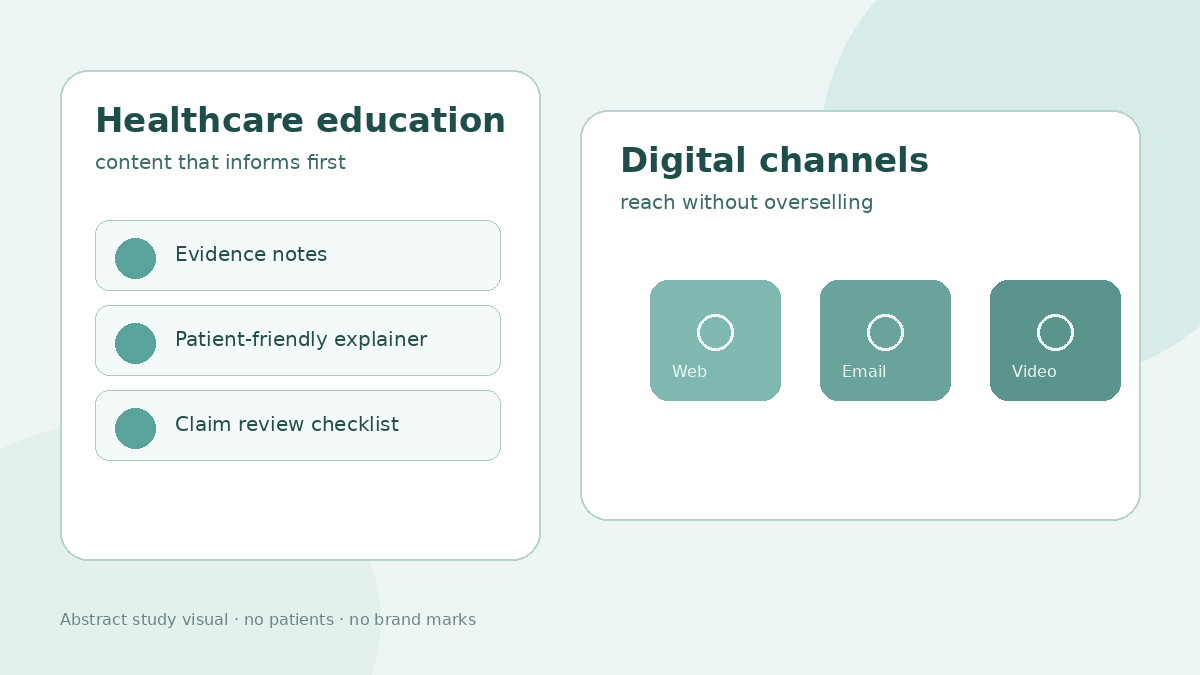
Digital channels that educate without overselling
Useful healthcare digital marketing often looks quieter than consumer growth playbooks. Explainers, condition literacy (where allowed), webinar recaps, and clinician FAQ pages tend to outperform hard CTAs because they reduce confusion before anyone books or refers. The WHO communications framework stresses accessible, understandable, and credible messaging; those principles travel well into website and email planning even when you are not a public-health agency.
Channel choice matters less than claim discipline. A short video that restates approved points carefully can be safer and clearer than a clever caption that implies outcomes. Email sequences work when each note answers one practical question. Paid search can help people find service pages, but landing pages still need the same restraint as print. For a plain-language walkthrough of how medical digital marketing programmes are often scoped, see this medical digital marketing overview. Adjacent notes from Mediconnexions cover similar planning layers for multi-channel teams.
Worth a watch if you plan accredited sessions: Norton Healthcare’s CME orientation on disclosures, commercial bias, and day-of learner notices.
Medical events as learning moments, not booth spam
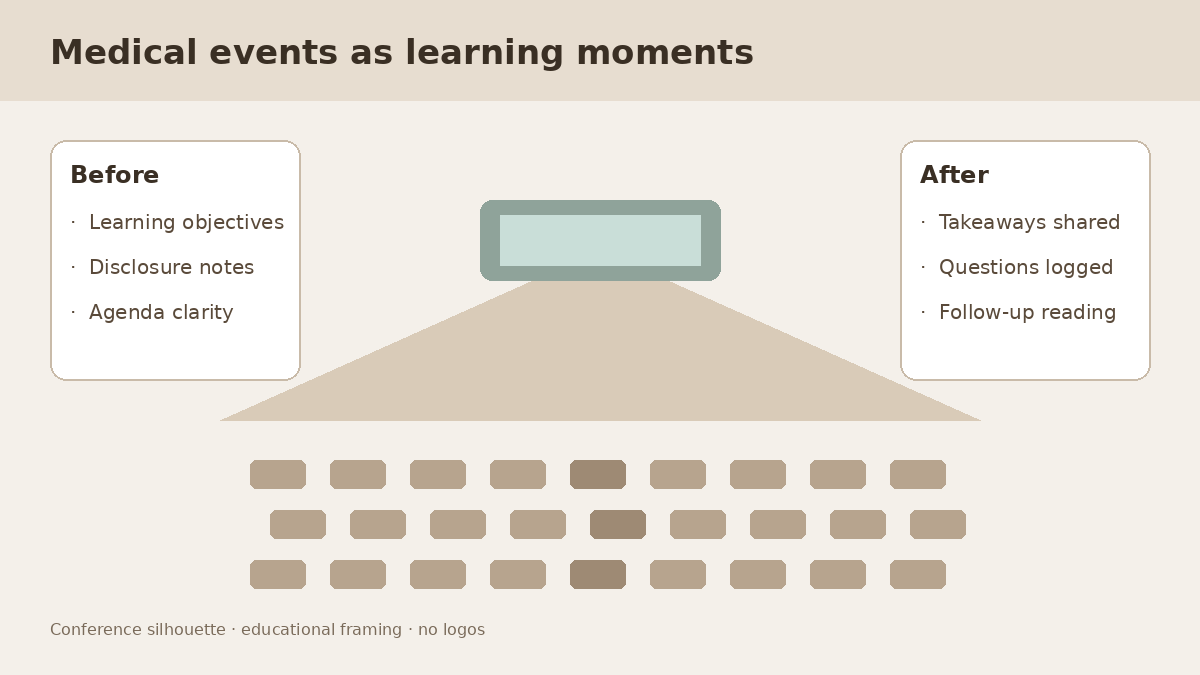
Conferences, symposia, and smaller CME-style evenings still move decisions in healthcare, but the old “booth spam” model ages badly. Clinicians remember clear objectives, honest disclosures, and time to ask questions. Organisers who treat the room like a classroom (agenda, faculty brief, conflict checks, post-event summary) usually create more durable goodwill than a giveaway table. Wikipedia’s primer on continuing medical education is a handy orientation for non-clinical marketers who need the vocabulary without pretending to be accreditation experts.
In Malaysia and the wider region, a healthcare event organiser role often sits between scientific content and logistics: venue, AV, registration hygiene, and materials review. If you want a concrete sense of how those moving parts are described in practice, browse their notes on organising medical events locally. The point for marketers is simple: the event should teach something someone can use on Monday morning.
How teams measure usefulness (not vanity clicks only)
Click-through rates still appear in decks, yet they rarely prove that a healthcare audience understood a claim or changed a referral pattern. Stronger signals look like completed education modules, qualified event attendance, follow-up resource downloads, clinician feedback scores, time-on-explanation pages, and reduction in repetitive FAQs to call centres. For public campaigns, comprehension tests and complaint monitoring matter as much as reach.
A practical reporting habit is to pair every channel metric with a “usefulness” question: Did this reduce misunderstanding? Did attendees leave with a clear next clinical or administrative step? Did any claim need a correction? Those questions keep dashboards honest when vanity spikes look glamorous but empty.
Planning question for next quarter: Which single claim, page, or event session would you rather make unmistakably clearer than louder, and who needs to sign off before you change it?